Thank you for Subscribing to Construction Business Review Weekly Brief

URW
Moad Ziadi, Director Of Construction Projects Europe
Construction Densification Challenges
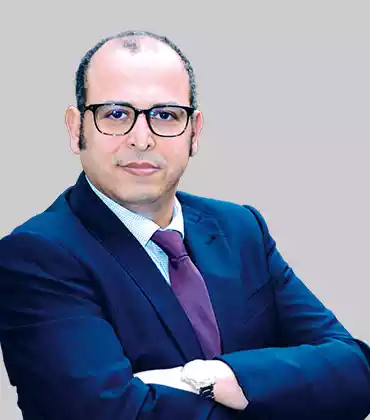
Moad Ziadi
Urban densification is becoming more and more necessary in the real estate field. Urban extension is a vicious cycle as new greenfield projects require additional connections (roads, networks, …) and more public infrastructures (schools, administration offices, …). It also increases soil artificialization and contributes to a higher risk of flooding, impacting the biodiversity and significantly decreasing the volume of farming lands and wild vegetations.
The existing assets in western Europe are often dilapidated because they were built during the 60’s or the 70’s, right after the economic recovery that followed the second world war. The majority of those constructions built during that period are loadedwith asbestos and lead. These unwanted toxic materials require specific care and a significant cost to be removed and depolluted. On top of that, the energy upgrading required by new regulations adds new construction market niches, promoted by the states in return of tax facilities. All these factors are contributing to a real construction cost increase, impacting the capex and the projects’ financial feasibility for the refurbishment and densification of existing assets.
Moreover, the urban densification for retail, offices and hotel projects is nowadays a key success factor for better business development. In fact, these types of projects are fully linked to urban connections. They also act as a leverage for public transportation networks and main city facilities, andthey upgrade rentability levels and assets’ value.
In the other side, urban densification is promoting greener construction processes. It considers the use of a bigger part of existing foundations and structural frames to avoid increasing steel and concrete quantities, which constitute the main factors contributing to the carbon footprint. The urban densification is also the main driver for better circular economy as the use of the existing elements extends the material lifecycle and ensurs the reuse -without transformation- of the materials kept on site.
While the developers and public authorities are encouraging urban densification, the construction actors should leverage this opportunity to fulfil the clients expectations. As a matter of fact, and considering my experience in the past twenty years as a professional in the construction industry and as a real-estate construction advisor, I feel that the Covid-19 crisis should be used by the construction stakeholders to face the large demand on urban densification, taking place in the economy’s post-recovery phase, of which plenty of construction technologies are still to be enhanced.
Firstly,the challenge for Architects,of integrating existing buildings to be refurbished and extended, is adding more complications to their task. This requires from architects to be more creative, ensuring design compliance with regulations such as fire egresses and taking into account the existing building layout.
Quite often existing buildings are not compliant with current regulations. And just to spice it all up, architects should consider the client cost expectations and offer smart, good-looking and modern buildings.
Secondly, Consultants and Engineering firms always consider dealing with existing structures to be a hard task. Sometimes after undressing an old building, the expected structural assumptions are very different from what they actually discover during the onsite surveying process. Redesigning, or adapting the designto the new discovered situation, turns out to be a very hard task for Engineer seven if the discovered site solution is advantageousto the project. Very often indeed, reshuffling part of the design signifies an annoying news for all construction stakeholders. Engineers should become more agile and flexible than they used to be, and the Construction technology industry should also develop new processes to invent more nondestructive surveys and thuslimit as much as possible unwanted on-site surveys discoveries.
Third, Authorities should improve regulations to prevent falling into standards that don’t encourage sustainable development and impact economic feasibility. As an example, in some European cities, the local regulation states that basement carparks are not counted in building rights areas, however those located in upper structures are deduced from the developer building rights areas. This regulation choice increases the carpark construction costs up to 150% and contributes to an increase of the carbon footprint of up to 170%. This significant increase of cost and environmental impact is linked to the fact that underground carparks require the construction of a retaining structure, digging the earth, removing the excavated soil, dewatering, etc.
All these elements slow down the construction schedule, increase the site indirect costs and increase the project carbon footprint.
And finally, the construction contractors should invest more in their Methods Engineering departments, to implement better construction technologies and optimize site sequencing and scheduling, better site tools, better green materials and equipment. The contractors should drive all their suppliers and subcontractors, such as deep foundations companies, formwork industrials and others, to investigate into cutting edge methods and greener construction processes in order to achieve these objectives in difficult urban densification contexts.
All those previous processes will ultimately contribute into making Construction Professionals to become more valuable in everyone’s perception. This will make them one of real-estate key decision makers, thanks to the new challenges that urban densification will face in the post- Covid-19 world.
The articles from these contributors are based on their personal expertise and viewpoints, and do not necessarily reflect the opinions of their employers or affiliated organizations.
Unlocking Your Potential: 5 Keys to Advancing Your Career in Property Management
Leanne C. Reynolds, Director, Property Management, Colliers [NASDAQ: CIGI]
-450x308_V16N.jpg)
The Internet of Drones: Redefining Construction in the age of Intelligence
Paul Doherty, President and CEO, the digit group, Inc.
From Incident to Insight in Safety Leadership
Matthew Shearer, Director of Environmental Health & Safety, Cash Construction Company, Co.

Building Successful Construction Projects With Clarity And Proactiveness
Victor Young, SVP - Development/Construction Management, Kairoi Residential
Keeping Projects on Track: Goals, Balance, Code, Technology, and Leadership
Daniel G. Murtagh, Vice President of Engineering, BXP
Building Strong Safety Cultures Across Complex Construction Projects
Curtis Corley, Director of Safety - South, AECOM Hunt
Building Projects through People, Planning and Culture
Ben McCafferty, Project Manager, Shook Construction